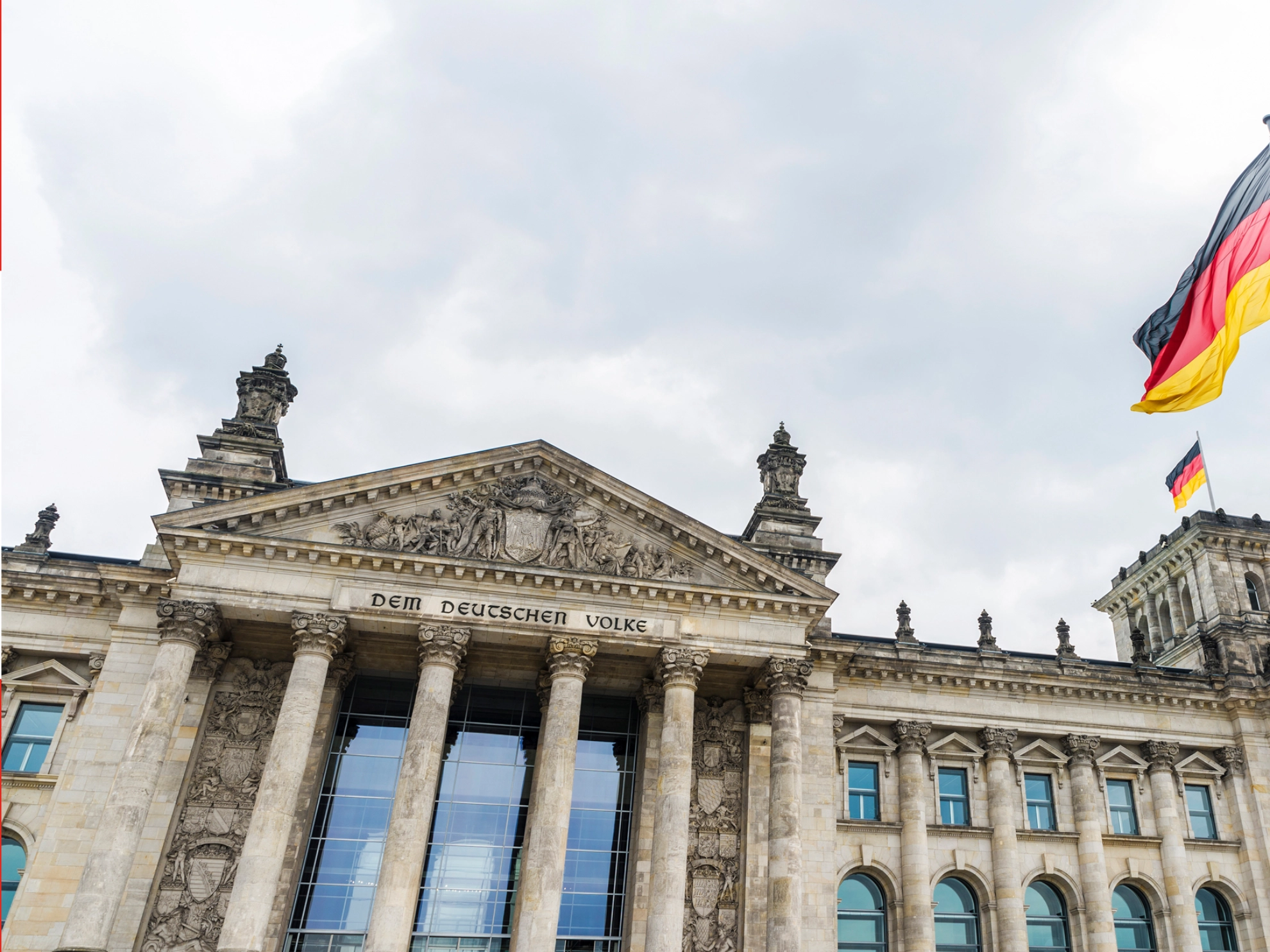
On February 23, Federal Elections (“Bundestagswahl”) will take place in Germany. There’s no way to escape the cesspit of political discourse in general, but right now even more so. Especially for non-natives and non-eligible voters, the rising question might be “What is going on here? And what is my unions perspective on this?”. As always, we can find the answers collectively.
Who or what are people voting for in this election?
The short answer is that people are voting for who will represent them in the Bundestag at the federal level.
The main parties that have chances to take up seats in the parliament are the Social Democrats SPD, the Conservative party CDU/CSU, the green party GRÜNE, the left-wing DIE LINKE, and the extreme right AfD. For any party to have a seat, they must reach at least 5% of votes in the election. On the brink of making this threshold are the politically ambivalent BSW and the liberal party FDP.
Germany has a mixed electoral system in which you have two votes: one for the representative of your constituency (“Wahlkreis”) and one for your preferred party. The party votes are reflected in the proportional allocation of parliamentary seats. Getting anything done in the Bundestag requires a majority vote. For the most part, no party gets a 50%+1 majority. Therefore, it is usually necessary for the competing parties to form a coalition in which they agree on a shared manifest and follow it with their votes in the Bundestag. Since all democratic parties have ruled out coalitions with the extreme right Alternative für Deutschland (AfD) party, possible coalitions right now are conservatives (CDU/CSU) and social democrats (SPD), conservatives and greens (GRÜNE) or all three of them together as one happy family. Sometimes these coalitions have fun names - the last government coalition was “Die Ampel” (the stoplight) due to the Green, Red, and Yellow colors of the Greens, SPD, and FDP.
If you are interested to find your Wahlkreis, the federal government has a website with an interactive map for you.
So, no major disruptions, huh?
On one hand, no. The proportional representation systems are securing a government that includes a broad political spectrum and keeps a reasonable peace. On the other hand, Germany has not been spared from the worldwide increase in political radicalization, especially in formerly centrist parties. Positions on fundamental social issues are more varied between the democratic parties than one might expect. Support for union politics and IG Metall demands like better labour rights, investments in infrastructure and industrial transformation are not universal, with regard to the IG Metall check of the election program. At the same time, parties like AfD, known for unconstitutional demands, managed to constantly shift the overton-window further to the right and are encouraging violence on- and offline, among other anti-democratic activities.
So, the AfD does not approve?
Not at all! It is not a “workers' party” - the AfD platform contains zero policies which could be in favour of employees, for example a dedicated concept for employees whose jobs are at risk due to industrial transformations and modern infrastructure for mobility and energy transition. There is also not a single mention of works councils or their co-determination. However, what they do support are things like slashing state support for lower income classes and abolishing wealth tax. Their key policy is aiming at marking immigration as the most important threat to society, despite substantial real-world evidence to the contrary.
Therefore, as workers and unions, we stand in solidarity with our colleagues from all over this world and the beautiful city of Berlin decisively against the right-wing threats. All trade unions under the DGB umbrella organization unite behind the demand for democratic elections.
Should migrant workers in Germany fear the AfD entering parliament? If the AfD gets a lot of votes, will it be able to push through laws that could harm migrant workers?
The AfD's entry into parliament will almost certainly have harmful consequences for immigrants like your colleagues, but how they would look like is unpredictable for now. German laws usually must be passed by the Bundestag, where a majority is required, and most established parties have ruled out working with the AfD anyway. A more direct and noticeable consequence is the societal resentment towards migrant workers - which trade unions are constantly trying to counteract.
How do labor unions interfere with parties? Are they allowed to do campaigning for the federal election?
Yes, trade unions are allowed to campaign in companies if they comply with the legal framework. They can share information about candidates and political positions if they’re aligned with the unions’ strong pro-labor positions. And they can advocate against anti-union politics. By the way - employees are also allowed to campaign in their workplaces, as long as they comply with the laws and regulations around maintaining the “industrial peace” within a company.
No voice in the German Bundestag? A strong voice in the workplace!
IG Metall Berlin would like to encourage all our members, including those who are not allowed to vote, to become active, to collectively articulate your concerns and needs, to participate in decision-making processes in your company and to make your voice heard in matters of working conditions such as self-determination, fair wages, equality and safety. Even though the “Bundestagwahl” is happening this year, there is another equally important election coming in the spring of next year: Elections for all works councils across Germany, something that happens every four years. Since working conditions are living conditions, the future is ours to shape. Join the union and get a strong vote in your workplace!